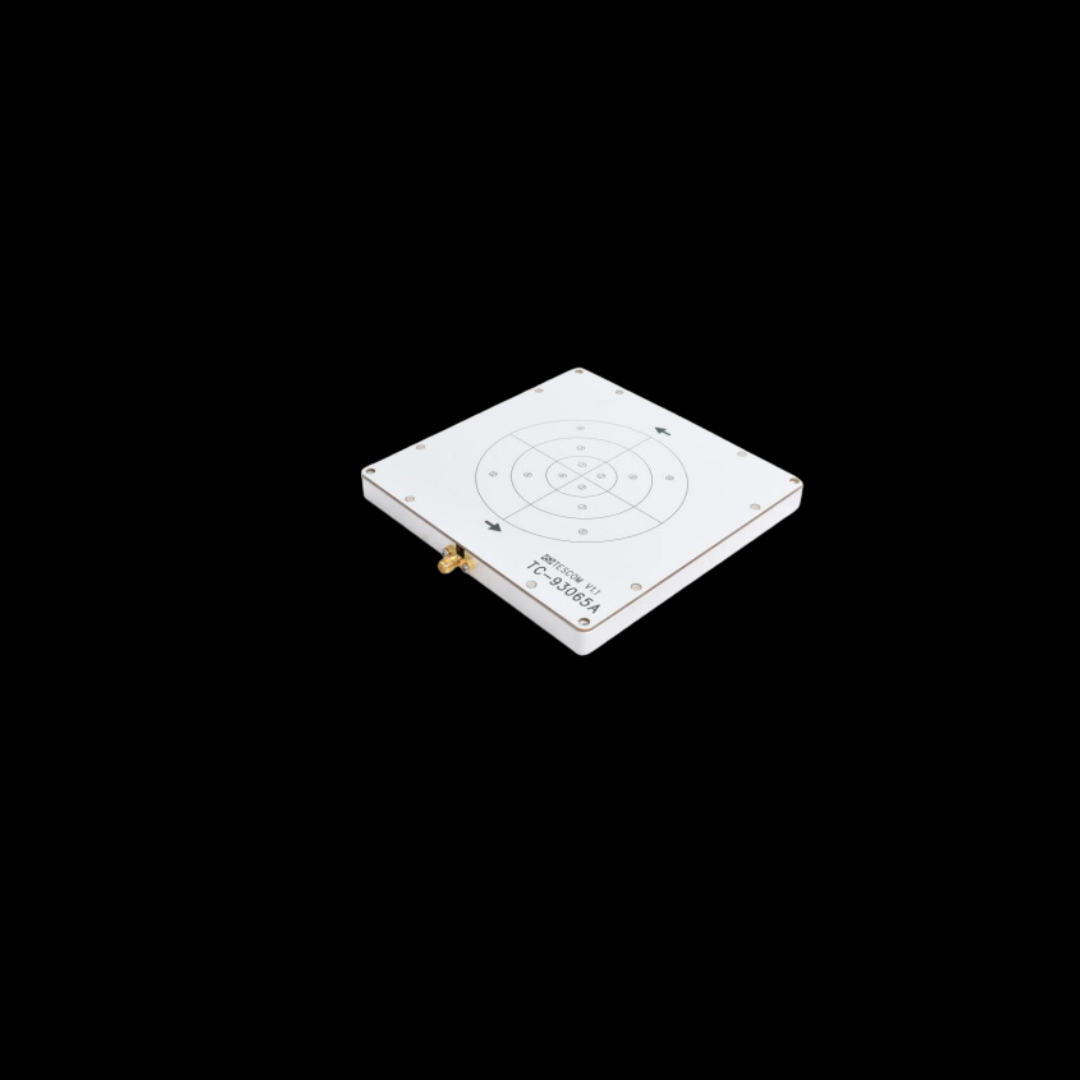
How an Antenna Coupler Works
An antenna coupler uses inductive coupling to transfer RF signals over short distances. It creates a magnetic field that induces a signal in the device under test. Because this process occurs in the near field, it limits unwanted RF radiation.
As a result, antenna couplers work well inside RF shielded environments and Faraday cages.
Why Antenna Couplers Are Used in RF Testing
Engineers use antenna couplers to test small wireless devices without direct cable connections. This method reduces signal loss and improves repeatability.
In addition, antenna couplers help prevent false failures caused by uncontrolled RF propagation.
Antenna Coupler vs Over-the-Air (OTA) Testing
OTA testing measures radiated performance in open or semi-open environments. In contrast, antenna couplers focus on near-field signal transfer.
Therefore, antenna couplers are ideal for early-stage testing, production testing, and shielded environments.
Applications
Antenna couplers support many RF testing applications, including:
-
Smartphones and tablets
-
IoT and Bluetooth devices
-
Automotive V2X modules
-
Wireless production testing
Solutions from CTS
At Concentric Technology Solutions (CTS), we design antenna couplers that integrate seamlessly with RF shield boxes and custom test fixtures.
As a result, customers achieve repeatable, accurate RF test results in controlled environments.
Antenna couplers are often used inside RF shield boxes to improve test accuracy.
http://Link “RF shield boxes” → /rf-shield-boxes/
http://Link “custom test fixtures” → /custom-test-fixtures/