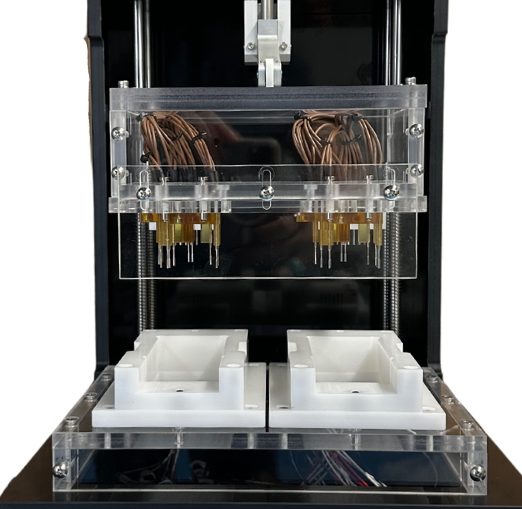
Custom Test Fixtures
Testing your DUT
Why Choose a Custom Test Fixture?
When Quality Control or Manufacturing identifies a need for a fixture, the next decision is whether your team can build it in-house. That choice depends on a few important factors. Each company’s situation is unique, so weigh these elements carefully.

Once quality control (QC) or manufacturing identifies the need for a test fixture, the next question is often whether your company can build the fixture in house. However, the answer is not always simple. In fact, several factors influence this decision, and as a result, it can vary from one company to another.
📊 Budget Considerations
Custom test fixtures can vary widely in cost. Typically, prices range from about $1,500 to $50,000 or more, depending on the level of complexity, required components, automation, and added features.
Before making a decision, it is important to consider the following:
The upfront cost of the fixture
Lost time and labor from wasted manpower units (MPUs)
Expenses caused by false failures or rejecting good units
Therefore, if your current testing process is costing valuable time and money, investing in a custom test fixture may be a smart and cost-effective solution.

🔄 Volume of Units
First, consider how many devices you are testing.
For low-volume production, simpler, existing fixtures—such as manual setups or bed-of-nails fixtures—can work well. In many cases, these options help reduce manpower units (MPUs) while keeping upfront costs low.
On the other hand, when production reaches hundreds or even thousands of units, manual testing can slow down operations. As a result, labor costs increase and efficiency drops. At this stage, a custom test fixture is often the better option because it supports faster, repeatable testing at scale.
Making the Right Choice
Ultimately, deciding whether to build a test fixture in house or outsource it depends on several key factors. Specifically, you should consider your available budget, expected production volume, and the overall complexity of your test requirements.
By carefully evaluating these areas, you can select a solution that improves efficiency, controls costs, and supports long-term production goals.
Test Procedure- If your DUT has a complicated test procedure that may require specialized operators or engineers to manage, this can take valuable time away from the critical path of development or manufacturing in other areas. Our custom test fixtures provide all the mechanical functions that can probe, connect, and measure the requirements. Paired with your test program our fixtures can allow the operator to have less in-depth knowledge of the product and accurately verify results.
You can read more at Custom Test Fixtures website