

Description
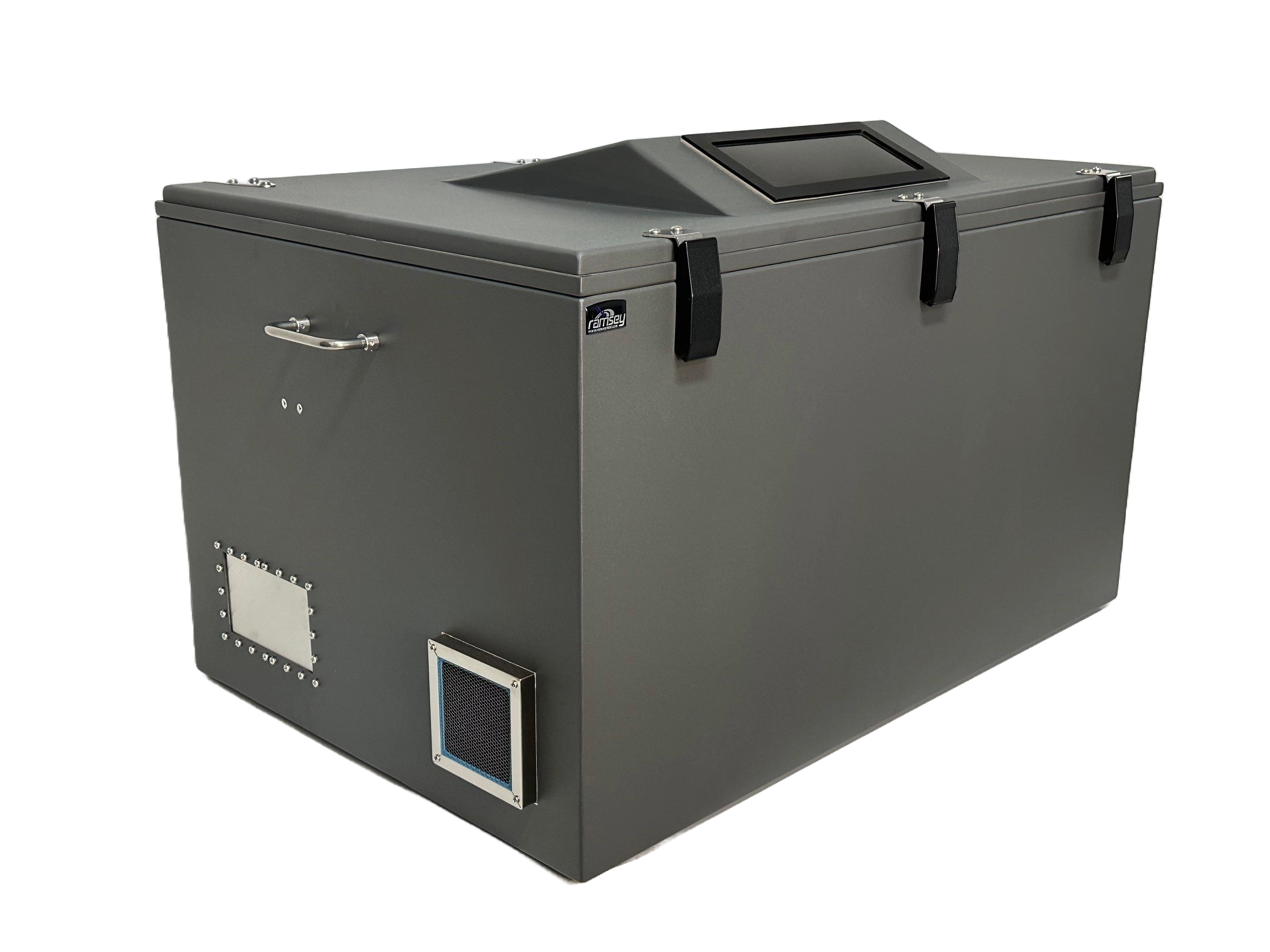
The STE6100M RF Shield Box creates a controlled environment for wireless device testing. Its large benchtop design provides plenty of room for devices, test fixtures, and supporting equipment. Engineers can use the enclosure for development, validation, troubleshooting, and production testing.
Outside RF signals can interfere with wireless testing and affect test results. The STE6100M helps reduce this unwanted interference. As a result, engineers can perform more consistent and repeatable RF measurements in the laboratory or production environment.
The enclosure features a top-loading design that provides convenient access to the internal test area. A double-lip RF-tight gasket helps maintain isolation when users close the enclosure.
An RF-tight viewing window allows engineers to monitor the device under test without opening the enclosure. Users can observe device displays, indicators, and other visual information while a test remains in progress.
STE6100M RF Shield Box for Wireless Testing
The STE6100M includes 3/4-inch RF absorbent foam inside the test chamber. This material helps control internal RF reflections and improves the test environment.
The enclosure also includes a 6-outlet 120VAC power strip. Engineers can power devices and supporting equipment directly inside the test area.
A 120 mm honeycomb passive ventilation system supports airflow during operation. Optional fan configurations can provide additional cooling when the test setup requires more airflow.
The large internal chamber makes the STE6100M RF Shield Box suitable for testing larger wireless products and more complex setups. Engineers can also customize the enclosure to meet the requirements of a specific application.
The STE6100M supports testing across many wireless technologies. These applications include Wi-Fi 4, Wi-Fi 5, Wi-Fi 6, Wi-Fi 6E, Bluetooth, RFID, 3G, 4G, and 5G.
Engineers can use the STE6100M for product development, RF troubleshooting, device validation, manufacturing tests, and other wireless test applications. Its combination of RF isolation, internal space, viewing access, power, and ventilation provides a flexible platform for repeatable RF testing.