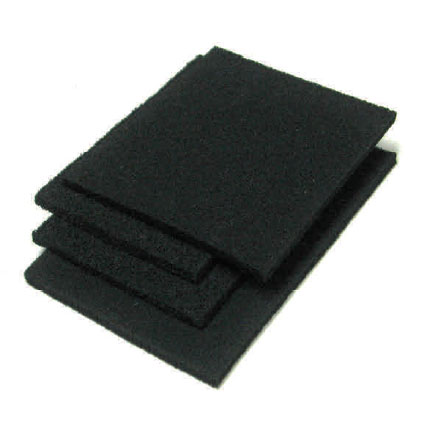
Description
The AFR0000-01 Lossy Foam Absorber is designed to reduce RF reflections inside shielded enclosures and controlled test environments. As a result, engineers can achieve more accurate and repeatable RF measurements during development, validation, and production testing.
Lossy foam absorbers play a critical role in RF, microwave, and EMC testing because they control how electromagnetic energy behaves within an enclosure. In particular, the AFR0000-01 Lossy Foam Absorber converts reflected RF energy into heat, thereby minimizing interference that can distort measurement results. Consequently, this controlled absorption improves signal stability and overall test confidence.
AFR0000-01 Lossy Foam Absorber for Controlled RF Testing
Engineers install RF absorbing foam inside shield boxes and test chambers to create uniform RF conditions. Without proper absorption, reflected signals can introduce errors and inconsistencies. Therefore, using lossy foam absorption becomes essential in precision RF testing environments. In addition, this absorber helps reduce standing waves that negatively impact signal integrity.
Lossy Foam RF Absorber Features and Benefits
-
Additionally, reduces RF reflections and standing waves
-
As a result, improves signal accuracy and measurement repeatability
-
Moreover, supports broadband RF and microwave frequencies
-
Furthermore, installs easily inside RF shielded enclosures
-
Finally, performs reliably in both lab and production environments
Applications in RF and EMC Environments
This RF absorbing solution is commonly used in RF shielded enclosures, EMC test chambers, and wireless device test setups. For example, typical applications include antenna testing, wireless device validation, signal integrity analysis, and regulatory compliance testing.
When combined with RF enclosures and properly designed test fixtures, the AFR0000-01 Lossy Foam Absorber enhances overall test performance. As a result, engineers can maintain stable internal RF behavior and reduce unwanted interference across multiple test cycles. Ultimately, this leads to more dependable and repeatable RF measurement outcomes.